
There is no single meaning attached to a ring worn on the middle finger. What a ring communicates depends on who is wearing it, where they are, and what the people around them have agreed to treat as a signal. That is less tidy than the folklore. The claim that a middle finger ring is a fixed declaration of independence has no documented origin, and the research on appearance does not support that kind of finger-by-finger decoding. This guide covers the readings people actually use, where each one came from, and the questions worth asking before you assume anything.
Historical Significance of Middle Finger Ring Placement
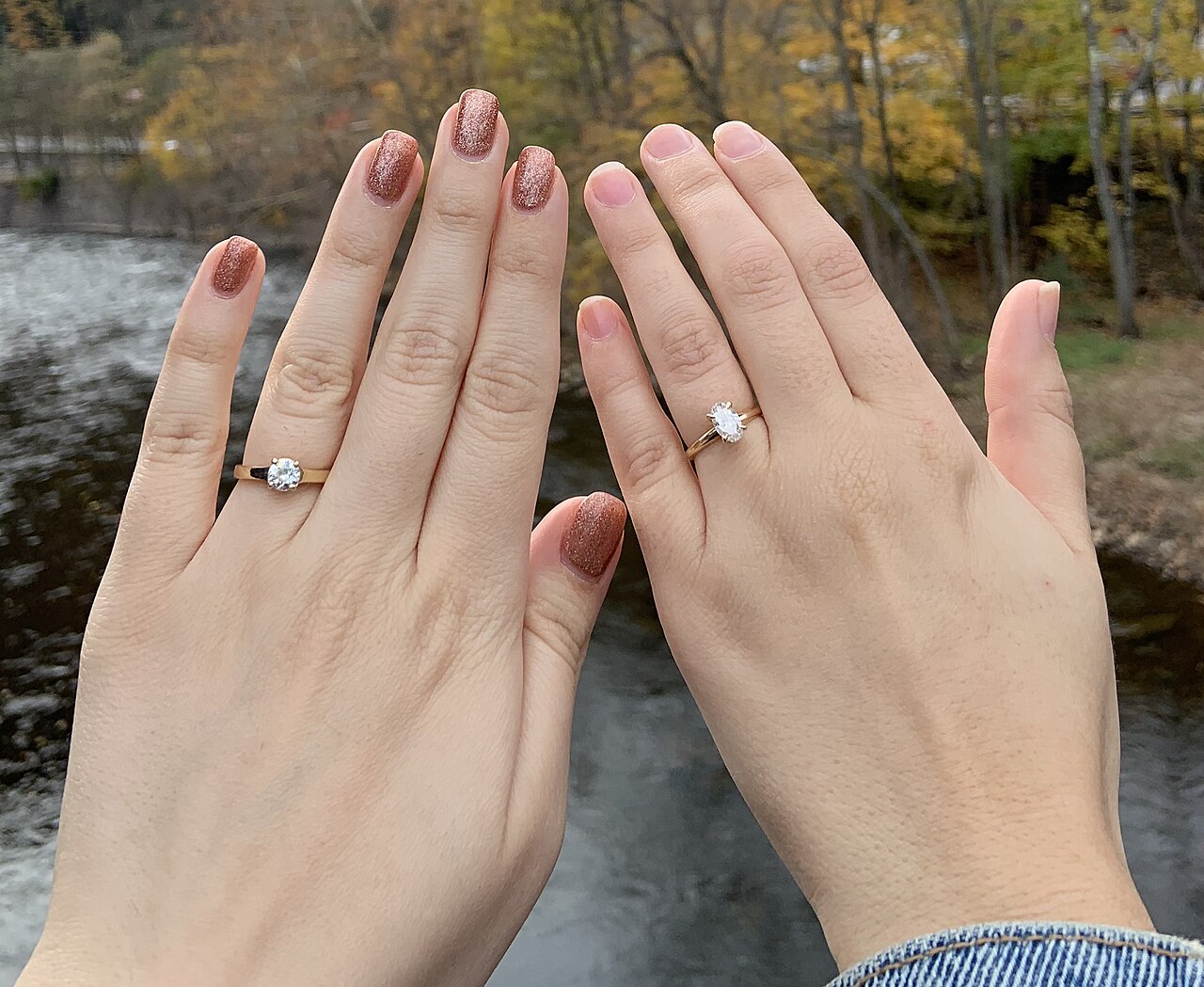
Rings have carried meanings for a very long time, and they worked because a group of people agreed on what they meant: seals, signets, mourning rings and wedding bands all depend on shared convention. What is missing is any reliable source for a system that assigns a specific personality trait to each finger. Museum collections catalogue rings by material, date, place and inscription, not by a psychology of finger choice. Treat the middle-finger rule as a modern convention that circulates in fashion writing and in astrology, not as an inherited tradition with a traceable origin.
Symbol of Independence and Self-Reliance
The most defensible thing you can say about a ring is narrower than the folklore: the objects a person chooses to wear become part of how they see themselves. In the classic account of the extended self, possessions are described as a major contributor to and a reflection of our identities (Belk, 1988). A ring worn every day fits that description closely: it is chosen, it is repeated and it is visible.
That still leaves the finger itself. If you want a reading you can defend, stay with what the ring does as an object — a sign the wearer repeats on purpose — rather than the personality trait it is supposed to reveal. People do read appearance as a cue about identity; they do not read a particular finger as a particular trait. The same over-reading shows up with other small signals, from an emoji in a text to the way someone stands when they talk to you.
Modern women increasingly embrace this symbolic gesture to assert professional confidence and emotional independence. The ring functions as a visual reminder of personal achievements, career milestones, and individual strength, effectively communicating self-reliance to both the wearer and observers in social settings.
Fashion Statement and Personal Style Expression
Versatility defines the middle finger ring as a powerful tool for personal aesthetic expression, allowing individuals to showcase their unique style preferences without the symbolic weight carried by other finger placements. This placement serves as a neutral canvas for experimenting with bold designs, statement pieces, and trendy accessories that reflect current fashion evolution without communicating specific relationship status or commitment levels.
The middle finger offers a commitment-free zone for bold jewelry experimentation, enabling pure aesthetic expression without traditional symbolic messaging.
Fashion coverage treats the middle finger as a permissive slot: a place to wear a bold piece without the reading that a ring finger carries. The usual options:
- Statement pieces – Oversized gemstones, sculptural designs, and eye-catching metals that command attention
- Stacking combinations – Multiple thin bands or mixed metals creating layered, contemporary looks
- Seasonal trends – Rotating styles that align with current fashion movements and color palettes
Relationship Status Indicators
Modern dating culture has transformed the middle finger ring into a subtle communication tool, allowing individuals to signal their relationship availability without explicitly stating their romantic status. Some women strategically choose this placement to indicate they are single and open to romantic possibilities, while others use it to suggest they are unavailable without wearing a traditional engagement or wedding ring.
People form impressions of strangers fast. In five experiments, judgments made after only 100 milliseconds of exposure to a face correlated highly with judgments made with no time limit, and longer viewing raised confidence rather than accuracy (Willis & Todorov, 2006). A ring is available in that first glance, which is why the middle-finger reading keeps circulating in dating advice even though no study establishes it. For a closely related example, see what a style label like “baddie” is really doing.
Cultural and Religious Meanings Across Different Societies
Finger symbolism is not one tradition; it is several, and they contradict each other. Systems that assign planets to fingers, wedding conventions that differ by country, and fashion rules that change every few years all use the same hand. Where two systems disagree, the ring cannot tell you which one the wearer had in mind.
The best-known traditions are these:
- Astrological and religious traditions assign planets and qualities to fingers, but the assignments vary by tradition and by country.
- Wedding conventions vary by country too: which hand carries the band is a matter of local custom, not biology.
- Fashion writing about which finger is “edgy” changes with each decade, which is what you would expect from a convention rather than a discovery.
The practical point is that any reading you apply says more about the convention you grew up with than about the person wearing the ring.
Professional and Career-Related Symbolism
It is tempting to treat a ring as workplace equipment — something that signals authority before you speak. The best-known version of that idea is enclothed cognition, the 2012 experiment in which people made fewer errors on a colour-naming task while wearing a white coat they had been told was a doctor’s coat (Adam & Galinsky, 2012).
Power and Authority Symbol
The replication is the part that matters if you plan to rely on that effect. A preregistered direct replication of the same task, analysed with equivalence testing, concluded that any real effect is too small to have been reliably detected under the original design: the same experiment, run to the same specification, did not reproduce the benefit (Burns, Fox & Greenstein, 2019).
So the honest claim is narrower. A ring can be a deliberate part of how someone presents themselves at work, and colleagues will notice it. What the evidence does not support is the larger claim — that the metal on your finger changes how well you think or how much authority you project.
Key aspects of this authority symbolism include:
- Readiness to take the lead when a decision has to be made
- Consistency between what someone says and what they do
The reading is in the eye of the observer, not in the ring.
Career Achievement Display
Increasingly, successful women utilize middle finger rings as tangible representations of their professional milestones, transforming personal jewelry into sophisticated career storytelling devices.
| Claim you will read online | What the evidence supports | Source |
|---|---|---|
| A middle-finger ring signals independence | Not established. No study ties a specific finger to a specific trait, and the rule has no traceable origin. | None found |
| The things you wear become part of your identity | Supported. Possessions are described as a contributor to and a reflection of identity. | Belk, 1988 |
| What you wear changes how you perform | Not supported. A preregistered replication found any effect too small to detect reliably. | Burns et al., 2019 |
| People form an impression of you in a glance | Supported. 100 ms of exposure produced trait judgments as strong as untimed ones. | Willis & Todorov, 2006 |
Milestones do get marked with objects people wear, and a ring is one of the oldest ways to do it. What that signals to a colleague is a separate question.
Psychological Aspects of Middle Finger Ring Choice
The psychology of a ring is easier to state once you drop the trait claims. Choosing what to wear is a form of self-presentation: the wearer picks the version of themselves to show. The extended-self account above explains why the object can matter to the wearer whether or not anyone else decodes it correctly.
Women who select this placement frequently demonstrate:
- Enhanced self-identity expression – Using jewelry as a tool for communicating personal values and aesthetic preferences
- Psychological comfort – Finding emotional connection through symbolic accessories that reinforce confidence
- Independence assertion – Choosing unconventional placement to distinguish themselves from traditional engagement or wedding ring conventions
What this adds up to is a preference for one kind of jewellery over another, which is a matter of taste rather than a personality result.
Different Ring Types and Their Specific Messages
The specific type of ring a woman selects for her middle finger communicates distinct messages about her personality, values, and current life circumstances. Statement rings featuring bold designs, oversized gemstones, or intricate metalwork typically signal confidence, creativity, and a desire to stand out from conventional expectations. In contrast, minimalist bands with clean lines, simple metals, or understated details often reflect sophistication, practicality, and an appreciation for timeless elegance over temporary trends.
Statement Rings and Bold Designs
Bold statement rings on the middle finger serve as powerful declarations of personal style, creativity, and independence that demand attention in ways subtle jewelry cannot achieve.
Statement jewellery is a visible choice, and visible choices get read as statements about the person making them. The overreach is the next step, where a bold ring is taken as proof of a confident personality. A ring is a decision about appearance, not a test result.
The most common statement ring characteristics include:
- Oversized proportions that cover significant finger surface area, creating visual impact
- Unique materials like raw crystals, vintage elements, or mixed metals that reflect personal aesthetics
- Artistic designs featuring geometric patterns, nature motifs, or abstract sculptures that spark conversation
A bold ring announces that its owner chose it on purpose.
Minimalist Bands and Symbolism
Subtle minimalist bands worn on the middle finger convey entirely different psychological messages than their bold counterparts, often representing inner strength, spiritual grounding, and quiet confidence that speaks through restraint rather than ostentation.
A minimalist band carries less information than a bold piece, which is often the point. A plain band reads as a steady habit rather than a piece of self-description, and that restraint is a style decision that can sit alongside any personality.
Quiet pieces often mark something the wearer does not need to explain, and the people who already know them tend to read it correctly.
How to Interpret Context and Individual Intentions
When attempting to decode the significance of a middle finger ring, observers must consider the broader circumstances surrounding the wearer rather than relying solely on generalized interpretations. Personal values and motivation factors vary dramatically between individuals, making universal assumptions problematic and potentially misleading.
Context clues provide essential insights into ring significance:
Understanding a middle finger ring’s meaning requires examining the wearer’s environment, social context, and personal behavioral cues rather than assumptions.
- Setting: a bold ring that works at a party can be the wrong signal in a formal workplace.
- Accessories: what sits beside the ring usually says more than the ring does.
Rather than imposing external meanings, a respectful reading starts with the wearer: ask, or say nothing. Ring choices tend to reflect personal decisions about self-expression and identity, and the people closest to the wearer usually have the least need for a decoding chart.
Related reading
- What it means when a girl is a “bop” — another label people read far more into than it carries.
- When she calls you “buddy” — one word read as a status signal.
- When she compares you to her boyfriend — comparison as a way of placing someone.