
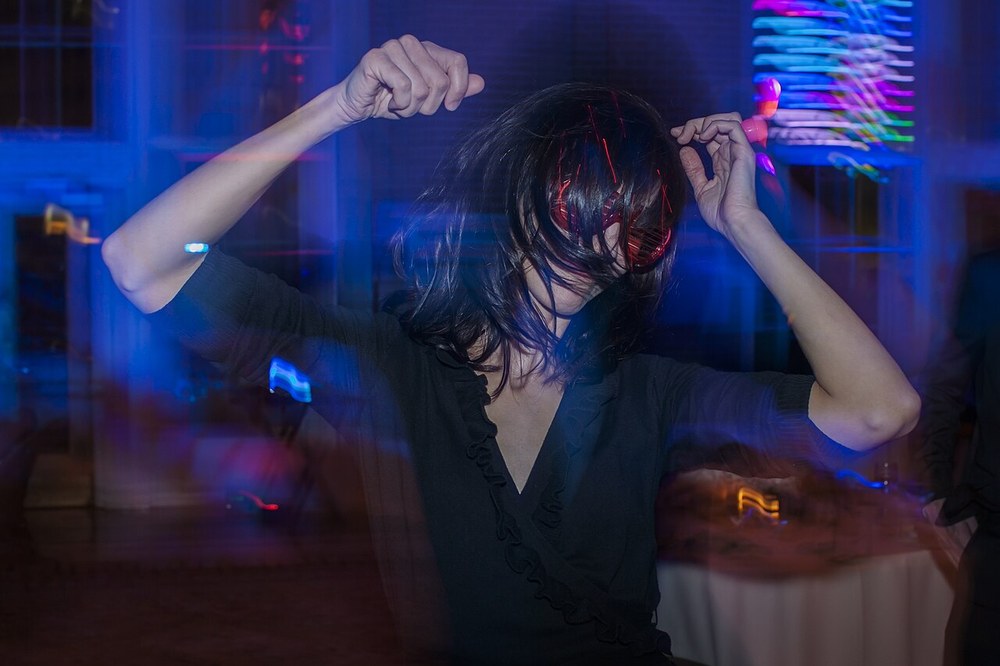
When a girl twerks on someone, it typically signals physical attraction, flirtation, or romantic interest through deliberate intimate movement and close proximity. Research indicates this nonverbal behavior functions as a sophisticated strategy to gauge male responses and test compatibility levels. However, the action may also reflect platonic comfort within established friendships, cultural adaptation to party environments, or confidence-driven self-expression celebrating personal sexuality. Environmental factors like music, lighting, and crowded spaces often lower inhibitions, encouraging spontaneous physical interaction that requires careful interpretation of underlying intentions and motivations.
Related reads on reading physical signals: what it means when a guy calls you hot, what it means when she touches your back, and what it means when she lets you touch her.
She’s Showing Physical Attraction and Interest
Physical attraction does show up in behaviour, though rarely in a single gesture. The courtship literature catalogues more than fifty solicitation behaviours that women use in social settings, and the ones that work share two features: they are directed at one person, and they escalate only if the first move is returned (Moore, Ethology and Sociobiology, 1985). Close proximity and deliberate movement fit that description; a gesture performed for the whole room does not.
It’s a Form of Flirtation and Testing Your Response
When women engage in twerking as a social interaction, they often employ this behavior as a sophisticated flirtation strategy designed to gauge male responses and interest levels. This dance form serves as a deliberate testing mechanism, allowing women to observe how potential partners react to intimate physical proximity and sensual movement.
The gesture also works as a test, and a test is how people gather information without committing to a question. Dance research on opposite-sex encounters finds that movement synchrony carries information in both directions: each person reads the other’s willingness from how the interaction is returned (Grammer, Kruck & Magnusson, Journal of Nonverbal Behavior, 1998). What looks like a dare is often a low-cost way of finding out.
Response testing through twerking provides valuable social information without requiring explicit verbal communication. A positive, respectful reaction may encourage further interaction, while discomfort or inappropriate responses signal incompatibility, helping women make informed decisions about potential romantic pursuits.
She’s Comfortable With You and Expressing Friendship
Closeness is not the same as courtship. Friends dance together in much the way couples do, because the movement itself produces the closeness: synchrony with another person increases reported rapport whether or not romance is involved (Grammer et al., 1998). Reading every instance as romantic is the common error, not the rare one.
Platonic Physical Comfort Level
Synchrony explains the comfort. When people move to the same beat, the boundary between self and other blurs slightly, and studies of group music-making link that synchrony to the release of endorphins and to reported social closeness (Tarr, Launay & Dunbar, Frontiers in Psychology, 2014). That is why a crowd can feel intimate for one song and ordinary the next.
Trust and Social Boundaries
Building upon this foundation of platonic comfort, the act of twerking often signals a deeper level of trust where social boundaries have been mutually negotiated and redefined between friends. This trust dynamics scenario demonstrates that both individuals have established clear communication about physical space and acceptable behavior within their relationship.
Shared movement is a bonding mechanism in its own right. Rhythmic, exertive activity performed in time with others is one of the few reliable routes to a sense of belonging, which is why dance floors produce friendships as often as they produce couples (Tarr et al., 2014).
Friendly Dance Floor Behavior
The dance floor creates a unique social environment where typical interpersonal boundaries become more fluid, allowing friends to express themselves through movement and physical proximity that might seem unusual in other contexts. When a girl twerks near or on someone she considers a friend, it often reflects her comfort level and trust within the relationship. Dance floor dynamics naturally encourage playful interactions, where physical closeness becomes a form of social bonding rather than romantic expression.
Setting changes what a gesture means. Behaviour that would read as a proposition in a quiet room reads as participation on a loud dance floor, because the ambient norm is set by what everyone around you is doing. Most of the ambiguity in a question like this one comes from context, not from the movement itself.
The Music and Atmosphere Have Her Caught Up in the Moment
When pulsing bass lines and infectious rhythms fill a crowded space, many people find themselves moving in ways they might not otherwise consider in quieter, more subdued environments. The music vibes create a psychological state where inhibitions naturally decrease, allowing individuals to express themselves more freely through dance movements.
The room does a lot of the work. Loud music, dim light and a dense crowd reliably lower self-consciousness, and the effect is measurable rather than metaphorical: at a live concert, engineers turned very-low-frequency speakers on and off out of audience earshot and found that attendees danced about 12% more when the inaudible bass was present (Cameron et al., Current Biology, 2022).
Note what that finding does and does not say. The bass changed how much people moved, not why each person moved or what they meant by it. A room that makes everyone dance a little more is not a room in which every dancer is signalling interest in the person standing nearest to them.
She’s Seeking Attention and Validation
Attention-seeking is a possible reading, and it is the least reliable one. Reading another person’s motive from a single gesture is genuinely difficult, and most observers are more confident about the reading than the evidence justifies. Treat the gesture as a hypothesis to test, not a diagnosis to act on.
It’s Her Way of Initiating Physical Intimacy
Physical proximity becomes a powerful communication tool when someone uses twerking as a deliberate signal of romantic or sexual interest. This dance form creates intentional physical connection, often indicating mutual interest between participants.
| Signal Type | Physical Cue | Likely Meaning |
|---|---|---|
| Extended Contact | Prolonged grinding motion | Testing romantic boundaries |
| Eye Contact | Maintaining visual connection | Gauging reciprocal interest |
| Body Positioning | Facing toward partner | Inviting closer interaction |
| Response Monitoring | Watching for reactions | Evaluating comfort levels |
Consent, not interpretation, is what makes proximity welcome. When researchers asked college students what counts as nonverbal consent, participants named a specific and limited set of behaviours — sustained eye contact, nodding, actively closing distance, using a contraceptive — and were clear that many physical cues are ambiguous on their own (Harrell, Lechuga & Hudock, Journal of Gender-Based Violence, 2023). The safest reading of any dance-floor gesture is the one the other person confirms.
She’s Following Social Dancing Norms in That Environment
Understanding the context becomes essential when interpreting twerking behavior, as many environments establish specific cultural expectations where this dance style represents normal social interaction rather than personal romantic interest. In nightclubs, music festivals, and party settings, twerking functions as accepted social currency within established dance culture protocols.
Venue norms are real and well understood. Nightclubs, festivals and parties establish their own codes, and dancing that would be out of place on a street or in a kitchen is ordinary there. In those settings the gesture often means exactly what it looks like: dancing.
The girl may simply be conforming to environmental expectations, viewing twerking as appropriate venue behavior rather than personal communication. Her actions reflect cultural adaptation to space-specific dance culture rather than deliberate romantic signaling toward any particular individual.
She’s Feeling Confident and Expressing Her Sexuality
When a girl feels empowered and comfortable in her own skin, twerking can serve as a form of personal expression that celebrates her body and sexuality without necessarily targeting romantic interest toward specific individuals. This dance style becomes a vehicle for demonstrating body confidence, allowing women to embrace their physical selves in dynamic, expressive ways.
Sexual expression through movement is a longstanding part of how people present themselves, and a dance floor is one of the few places where that expression is expected rather than policed. When someone uses it as self-expression, the audience is secondary: the point is the freedom of the movement, not the reaction it gets.
How to Respond Appropriately to Her Actions
Recognizing the appropriate response to twerking requires careful consideration of context, consent, and respect for personal boundaries. Understanding boundaries becomes essential when traversing these intimate physical interactions, as misreading signals can lead to uncomfortable situations for both parties involved.
Effective communication skills play a significant role in responding appropriately to such gestures. Rather than making assumptions about intent, individuals should focus on reading verbal and non-verbal cues carefully. If unsure about boundaries, asking for clarification demonstrates respect and emotional intelligence.
If you are unsure, the reliable move is to check rather than to guess. Keep respectful distance unless you are invited closer, respond without overreacting, and match the other person’s energy only once mutual interest is clear. That is not timidity; it is the reading the research actually supports.
What the Gesture Can and Cannot Tell You
Most of the ambiguity in a question like this one dissolves once you separate what a dance-floor gesture reliably signals from what people assume it signals.
| What you observe | What it reliably shows | What it cannot show on its own |
|---|---|---|
| Dancing near or on someone | Comfort with proximity in this setting | Whether the interest is romantic or social |
| Sustained eye contact | Attention is being directed at you | Anything about long-term intent |
| Moving in time with you | Rapport and synchrony | Whether it is courtship |
| Following venue norms | Adaptation to the room | Individual motive |
| Checking your reaction | Interest in your response | A yes on your behalf |
The short version. A dance-floor gesture reports that the moment is warm and the distance is comfortable. It does not report intent, and it never replaces asking. Hold the interpretation loosely and the conversation openly, and the ambiguity stops mattering.
Related reading: