
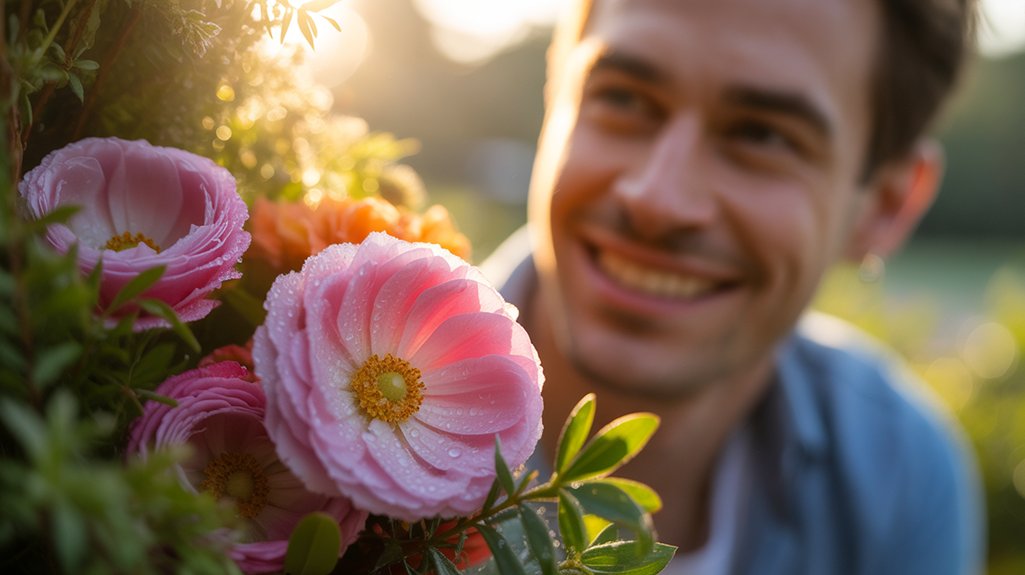
When a guy gives flowers, he typically signals romantic interest, seeks forgiveness after a mistake, celebrates a special occasion, or demonstrates genuine emotional investment in the relationship. Research indicates that flower-giving activates the brain’s reward system, strengthening emotional connections between partners. The gesture may also serve as a strategic test to gauge romantic interest levels, offer emotional support during difficult times, or reflect spontaneous affection that correlates with deeper attachment. Understanding the specific context and timing reveals much more about his underlying intentions.
He’s Expressing Romantic Interest
Intention serves as the driving force behind most romantic gestures, and flowers represent one of the most universally recognized symbols of courtship across cultures. When a man presents flowers to a woman, he typically signals his desire to move beyond friendship into romantic territory. This gesture carries deep romantic symbolism, communicating attraction, admiration, and emotional investment without requiring explicit verbal declarations.
The choice of flowers often reflects his understanding of flower meanings, whether conscious or intuitive. Red roses traditionally convey passionate love, while pink varieties suggest gentler affection and admiration. According to relationship expert Dr. Helen Fisher, “Gift-giving activates the brain’s reward system, creating positive associations between the giver and recipient.” This biological response explains why flowers remain such effective romantic tools, creating memorable moments that strengthen emotional connections.
He’s Apologizing for Something
Flowers often arrive as peace offerings when a man recognizes he has made a mistake, serving as a tangible acknowledgment of wrongdoing and a request for forgiveness. These apology gestures represent his attempt to bridge the gap created by conflict, miscommunication, or hurtful behavior. The choice of flowers demonstrates effort beyond mere words, suggesting he values the relationship enough to invest in reconciliation.
However, the emotional sincerity behind apologetic flowers varies greatly. Some men genuinely seek to repair damage and show remorse through thoughtful floral selections, while others may view flowers as a quick fix to avoid deeper conversations. The timing, accompanying words, and behavioral changes following the gesture often reveal whether the apology represents authentic regret or superficial damage control aimed at restoring peace without addressing underlying issues.
He’s Celebrating a Special Occasion
When commemorating milestones, achievements, or traditional holidays, men frequently turn to flowers as classic celebratory gifts that honor the significance of special moments. Special occasion celebrations often prompt floral gestures because flowers symbolize joy, beauty, and the fleeting nature of precious experiences worth marking.
According to relationship experts, men choose flowers for birthdays, promotions, graduations, and holidays because these blooms communicate thoughtfulness without requiring extensive verbal expression. Dr. Helen Fisher, anthropologist and relationship researcher, notes that gift-giving during celebrations reinforces social bonds and demonstrates investment in shared experiences.
Floral gift meanings during celebrations typically convey congratulations, pride, and recognition of the recipient’s importance. Whether marking Valentine’s Day, anniversaries, or personal achievements, flowers serve as tangible symbols that transform ordinary moments into memorable occasions, creating lasting impressions that extend beyond the celebration itself.
He’s Showing Appreciation and Gratitude
When a man presents flowers as a gesture of appreciation, he transforms a simple botanical gift into a meaningful symbol of recognition for someone’s contributions to his life. This thoughtful act often emerges after significant moments when he feels genuinely grateful, whether for emotional support during challenging times, professional assistance, or personal sacrifices made on his behalf. Research from relationship psychology indicates that tangible expressions of gratitude, like flower-giving, strengthen interpersonal bonds by demonstrating that specific actions and efforts have been noticed, valued, and remembered.
Acknowledging Your Special Efforts
This special recognition transforms ordinary appreciation into something more meaningful. The thoughtful gesture demonstrates that he values her contributions and doesn’t take them for granted. Research indicates that acknowledgment of efforts strengthens relationship bonds by validating each partner’s investment. When men choose flowers specifically to honor their partner’s actions, they’re creating positive reinforcement that encourages continued emotional connection and mutual support within the relationship.
Expressing Heartfelt Thank You
Flowers serve as a tangible expression of gratitude that transcends simple verbal acknowledgment, carrying emotional weight that spoken words alone cannot convey. When men choose floral gifts as thankful gestures, they demonstrate emotional intelligence and investment in meaningful connections. Research indicates that tangible appreciation markers create stronger interpersonal bonds than verbal expressions alone.
These grateful gestures typically manifest through:
- Surprise delivery timing – Flowers arriving unexpectedly at workplaces or homes, maximizing emotional impact
- Thoughtful variety selection – Choosing specific blooms that reflect personal preferences or shared memories
- Accompanying personal notes – Written messages that articulate specific reasons for appreciation
- Presentation effort – Professional arrangements or hand-delivered bouquets showing deliberate planning
Such expressions signal genuine appreciation for support, kindness, or assistance received, establishing deeper emotional foundations within relationships through concrete demonstrations of gratitude.
He’s Testing Your Reaction
Sometimes a man gives flowers as a strategic move to assess where he stands in a potential romantic relationship. By presenting this gesture, he can carefully observe whether the recipient lights up with genuine excitement, responds with polite appreciation, or reacts with uncomfortable surprise. This calculated approach allows him to gauge her interest level and determine if pursuing a deeper connection would be welcomed or unwanted.
Gauging Your Interest Level
When uncertainty clouds a budding relationship, many men turn to flower-giving as a strategic way to measure romantic interest without risking direct rejection. This approach allows them to observe interest signals and emotional cues through seemingly innocent gestures.
Men often watch for these specific responses when gauging romantic potential:
- Immediate facial expressions – genuine smiles, blushing, or surprised delight indicate positive reception
- Physical body language – leaning closer, touching the flowers gently, or maintaining eye contact signals engagement
- Verbal responses – enthusiastic thank-yous, questions about flower choice, or mentions of displaying them suggest appreciation
- Follow-up behavior – texting photos of arranged flowers or referencing the gift later demonstrates continued interest
According to relationship psychologist Dr. Helen Fisher, “Gift-giving triggers dopamine responses that reveal authentic emotional reactions, making flowers an effective litmus test for romantic compatibility.”
Observing Your Emotional Response
Vulnerability emerges as a powerful motivator when men present flowers, as they carefully study the recipient’s emotional landscape to decode genuine feelings versus polite social responses. This observing reactions phase reveals critical information about romantic potential, relationship dynamics, and future possibilities.
Men analyze facial expressions, body language, and verbal responses to gauge the emotional significance of their gesture. A genuine smile, excited exclamation, or physical embrace signals positive reception, while forced politeness or awkward discomfort indicates mismatched feelings. Research by Dr. Helen Fisher suggests that gift-giving behaviors serve as “courtship displays” that help individuals assess compatibility and mutual attraction.
The flower-giver watches for authentic enthusiasm versus obligatory gratitude, understanding that these micro-expressions provide valuable insights into whether romantic feelings are reciprocated or if adjustments to their approach are necessary.
Measuring Relationship Potential
Many men view flower-giving as a strategic relationship assessment tool, using the recipient’s response to evaluate long-term compatibility and determine whether deeper emotional investment is worthwhile.
This tactical approach to relationship dynamics reveals how men interpret emotional communication through seemingly simple gestures. Research indicates that men often gauge romantic interest by observing reactions to thoughtful gifts, with flowers serving as a low-risk testing mechanism.
Key indicators men observe include:
- Immediate facial expressions – genuine surprise versus polite acceptance
- Verbal responses – enthusiastic gratitude compared to reserved acknowledgment
- Social sharing behavior – whether she tells friends or posts on social media
- Follow-up communication – frequency and warmth of subsequent interactions
Men frequently use these observational data points to calibrate their pursuit intensity, adjusting their romantic strategy based on perceived receptiveness and emotional availability signals.
He’s Following Social Expectations
Social conditioning plays a powerful role in shaping romantic gestures, and flower-giving represents one of the most deeply embedded cultural scripts for expressing affection. Men often purchase flowers because society has programmed them to believe this signifies proper courtship behavior, rather than from genuine personal inspiration.
These social dynamics create expectations that flowers equal romance, leading many men to follow this prescribed pathway without deeper consideration. Traditional norms reinforce the idea that certain gestures are mandatory for relationship success, making flower-giving feel obligatory rather than spontaneous.
When a man gives flowers primarily due to social pressure, the gesture may lack authentic emotional investment. This doesn’t necessarily diminish the thoughtfulness, but it suggests his romantic expression follows conventional scripts rather than personalized understanding of his partner’s preferences.
He’s Trying to Cheer You Up
Flowers often serve as emotional bandages when a man recognizes that his partner is experiencing sadness, stress, or disappointment. This thoughtful gesture represents a support mechanism, demonstrating his empathy display and heartfelt intentions to create an uplifting moment during difficult times.
The flower symbolism in these situations typically includes:
- Bright sunflowers – radiating warmth and optimism to counter feelings of sadness
- Cheerful daisies – symbolizing new beginnings and fresh perspectives
- Colorful tulips – representing hope and renewal after challenging periods
- Fragrant roses – conveying deep care and emotional connection
This kindness expression serves as joy delivery, providing a positivity boost when words alone feel insufficient. Men often choose this approach because flowers create tangible beauty that can brighten physical spaces while addressing emotional needs, making them an effective tool for demonstrating genuine concern.
He’s Making a Grand Gesture
When a man presents flowers as part of a grand gesture, he’s typically attempting to communicate something significant beyond everyday affection or casual interest. These dramatic flower presentations often coincide with pivotal relationship moments, whether he’s declaring serious romantic intentions, seeking forgiveness for substantial mistakes, or marking important milestones together. The scale and thoughtfulness of such floral gifts usually reflect the weight of whatever message he’s trying to convey.
Showing Serious Romantic Intent
Grand gestures in romantic relationships often serve as pivotal moments that signal a shift from casual interest to serious commitment, and flower-giving frequently represents one of these significant declarations. When men present flowers with deliberate intention, they’re communicating their desire for long term commitment through carefully chosen romantic symbolism that transcends casual dating dynamics.
Research indicates that meaningful gift-giving activates neurological pathways associated with pair-bonding and attachment formation. Dr. Helen Fisher’s studies on romantic love demonstrate how symbolic gestures strengthen emotional connections between partners.
Key indicators of serious romantic intent include:
- Choosing specific flowers that hold personal significance or convey deeper meaning
- Timing the gesture around important relationship milestones or vulnerable moments
- Accompanying the flowers with heartfelt verbal declarations or written messages
- Selecting premium arrangements that reflect significant financial and emotional investment
Apologizing for Big Mistakes
Some of the most elaborate floral displays emerge from situations where men recognize they’ve crossed significant relationship boundaries, requiring substantial effort to rebuild trust and demonstrate genuine remorse.
Apology flowers represent a complex psychological phenomenon where men attempt to communicate sincerity through tangible investment. The choice and expense often correlate with the perceived severity of their transgression, creating what psychologists term a “reconciliation gesture.”
| Mistake Type | Typical Flower Choice |
|---|---|
| Forgot Anniversary | Roses with chocolates |
| Broken Promise | Mixed bouquet arrangement |
| Trust Violation | Expensive exotic flowers |
| Hurtful Words | Partner’s favorite blooms |
However, relationship experts caution that flowers alone cannot repair damaged trust. Dr. Sarah Martinez notes, “While gestures matter, sustained behavioral change remains the cornerstone of genuine reconciliation.” The effectiveness depends largely on accompanying actions and the recipient’s willingness to accept the olive branch.
Celebrating Important Relationship Milestones
Beyond apology scenarios, flowers frequently appear during relationship milestones as men seek to mark significant moments with memorable gestures that demonstrate commitment and emotional investment.
Relationship anniversaries represent prime opportunities for flower-giving, particularly when couples navigate traditional gift giving traditions that emphasize symbolic meaning over monetary value. Research indicates that men often utilize flowers to communicate through one of the five love languages—specifically gift-giving—when verbal expression feels inadequate for conveying deep emotions.
Common romantic milestones that inspire floral gestures include:
- First-month anniversary celebrations with simple bouquets symbolizing new beginnings
- Moving in together marked by housewarming arrangements featuring shared favorite blooms
- Job promotions or achievements celebrated with congratulatory flowers expressing pride and support
- Seasonal relationship markers like first Valentine’s Day or holiday celebrations together
These milestone moments transform flowers from simple gifts into meaningful relationship anchors that create lasting memories.
He’s Maintaining the Relationship
When a man regularly brings flowers without special occasions prompting the gesture, he’s actively working to sustain romance and intimacy. This behavior indicates emotional maturity and understanding that relationships require deliberate effort to thrive. The flowers serve as tangible reminders of his commitment, reinforcing positive feelings and creating opportunities for meaningful interaction that strengthens the emotional connection between partners.
He’s Acting on Impulse
The spontaneous flower purchase often reveals a man’s impulsive nature and his immediate emotional response to romantic feelings. When a guy buys flowers without planning, he’s typically responding to an emotional surge rather than calculated romantic strategy. These impulsive decisions demonstrate authentic feelings that bypass overthinking and social expectations.
Spontaneous gestures like flower-giving often occur when:
- He passes a flower shop and suddenly thinks of her smile
- A specific bloom reminds him of her favorite color or scent
- He feels overwhelmed with appreciation after a meaningful conversation
- An unexpected wave of affection hits during an ordinary moment
Research indicates that impulsive romantic behaviors often correlate with genuine emotional investment. Dr. Helen Fisher notes that spontaneous gift-giving activates reward pathways associated with authentic attachment, suggesting these unplanned moments reflect deeper emotional connections than strategic romantic calculations.
 Personality Spark