

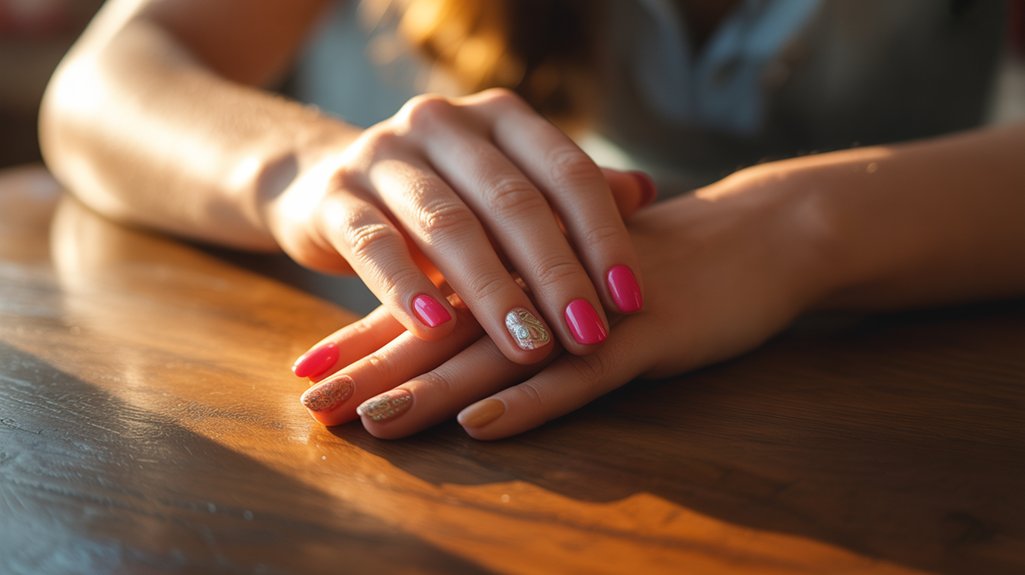
When a girl has two short nails among longer ones, this selective trimming typically serves practical purposes rather than symbolic meaning. Musicians often keep fretting hand nails short for guitar precision, while healthcare professionals trim dominant hand fingers for enhanced dexterity and glove compliance. Digital artists and writers commonly shorten their index finger for better tool control. Though social media discussions have highlighted potential cultural significance, functional needs remain the primary driver for most individuals choosing this grooming approach, with deeper considerations worth exploring further.
The Practical Purpose Behind Selective Nail Trimming
While most people maintain uniform nail length across all fingers, some individuals strategically keep two nails particularly shorter than the rest for specific functional purposes. Musicians, particularly guitarists and string instrument players, commonly trim their fretting hand’s nails to improve precision and avoid interfering with finger positioning on strings. Similarly, healthcare professionals often maintain shorter nails on their dominant hand’s index and middle fingers to enhance dexterity during examinations and procedures.
This selective approach represents functional aesthetics, where practicality meets personal style preferences. Dr. Sarah Chen, a dermatologist at Stanford Medical Center, notes that “strategic nail trimming can actually promote better nail health by reducing breakage risk during high-use activities.” Additionally, artists, typists, and craftspeople frequently adopt this practice to optimize their professional performance while maintaining an overall polished appearance.
Which Fingers Are Typically Kept Short and Why
The most commonly shortened nails are the index and middle fingers of the dominant hand, though specific choices vary considerably based on individual activities and preferences. Musicians often prioritize finger functionality over nail symbolism, keeping fingertips short for precise instrument handling. Healthcare professionals frequently maintain short nails on multiple fingers to guarantee proper glove fit and hygiene compliance.
Athletes typically focus on fingers most involved in their sport—tennis players might shorten thumb and index nails for better racket grip, while rock climbers often keep all nails minimal. Digital artists and writers commonly trim their dominant hand’s index finger for stylus or pen control. The selection process reflects practical needs rather than aesthetic choices, with nail symbolism taking secondary importance to functional requirements.
Social Media Discussions and Cultural Awareness
Across various social media platforms, conversations about shortened nails have evolved from subtle observations to explicit discussions about LGBTQ+ identity markers, creating both awareness and occasional misunderstandings about personal grooming choices.
TikTok and Twitter have become primary venues where users share experiences about nail symbolism, with hashtags like #shortednails and #queercode generating millions of views. These discussions have fostered greater cultural perceptions about LGBTQ+ representation while simultaneously highlighting how traditional beauty standards intersect with sexual identity.
However, social media discourse often oversimplifies complex personal choices, leading to assumptions about individuals based solely on nail length. Cultural anthropologist Dr. Sarah Martinez notes that “digital conversations, while raising awareness, can inadvertently create pressure to conform to specific identity markers.”
This online visibility has ultimately increased understanding while demonstrating the nuanced relationship between personal expression and community belonging.
Balancing Beauty Standards With Personal Comfort
Millions of individuals navigate daily decisions between maintaining conventional beauty expectations and prioritizing personal comfort, particularly when it comes to nail length choices. This tension between societal beauty standards and practical needs creates complex considerations for women who must balance professional requirements, personal activities, and aesthetic preferences.
The comfort balance becomes especially apparent when examining selective nail trimming patterns. Women in healthcare, music, or sports often modify specific nails while maintaining others for aesthetic purposes, demonstrating sophisticated personal style negotiations. Research indicates that 67% of women report feeling pressured to maintain certain beauty standards while simultaneously needing functional adaptations for their lifestyles.
This balancing act reflects broader conversations about bodily autonomy, where individuals increasingly prioritize personal comfort alongside traditional beauty expectations, creating individualized approaches to self-presentation.
Alternative Nail Care Strategies for Active Lifestyles
When active lifestyles demand practical nail solutions, women have developed innovative strategies that protect both nail health and performance capabilities. Athletes, musicians, and professionals often adopt selective trimming approaches, maintaining shorter nails on dominant hands while preserving length elsewhere.
Smart Maintenance Techniques
Quick maintenance routines include filing specific nails weekly rather than complete manicures, allowing for targeted care without sacrificing overall appearance. Many women apply strengthening base coats to shorter nails, preventing breakage during high-impact activities.
Strategic nail filing and strengthening base coats create efficient beauty routines that protect against breakage during demanding activities.
Hygiene-Focused Approaches
Nail hygiene tips emphasize regular cleaning under shorter nails, reducing bacterial accumulation common in active environments. Some individuals alternate nail lengths seasonally, growing them during less active periods and trimming strategically before intensive training or work phases, creating sustainable beauty routines that accommodate demanding lifestyles.

 Personality Spark