

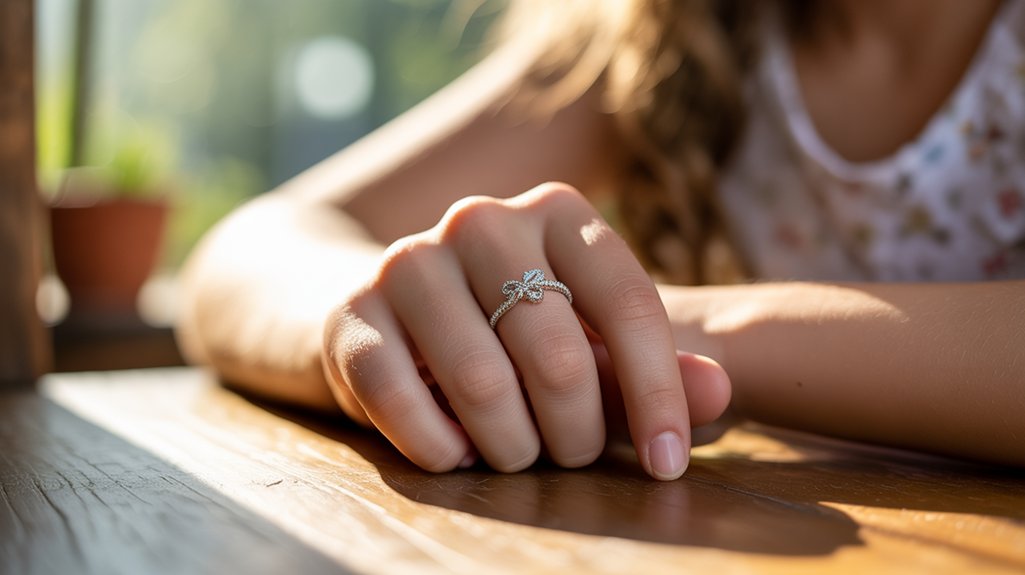
When a girl wears a ring, the meaning depends largely on finger placement, cultural background, and ring design. A ring on the left ring finger typically indicates marriage or engagement in Western cultures, while other fingers may represent fashion choices, personal style, or cultural traditions. The ring could symbolize a promise between partners, family heritage through heirloom jewelry, academic achievements, or simply aesthetic preferences. Religious and cultural contexts also influence ring significance across different communities. Understanding the complete picture requires considering multiple factors that reveal deeper meanings.
Ring Finger Placement and Relationship Status
Where exactly a woman chooses to wear her ring can reveal considerable information about her relationship status, personal beliefs, and cultural background. Ring finger meanings vary considerably across different cultures and contexts, making them essential relationship indicators for those seeking to understand social signals.
The left ring finger traditionally signifies marriage or engagement in Western cultures, as ancient Romans believed a vein connected this finger directly to the heart. However, Eastern European and some Latin American countries use the right ring finger for wedding bands, creating potential confusion for international observers.
Middle finger rings often indicate independence or fashion choices, while index finger rings may suggest confidence or authority. Thumb rings frequently represent strength or willfulness, though cultural interpretations vary widely across different societies and generational groups.
Cultural and Religious Significance of Rings
Symbolism transcends mere decoration when examining how different cultures and religions imbue rings with profound spiritual meaning, creating complex systems of identification that extend far beyond romantic relationships. Cultural beliefs surrounding rings vary dramatically across societies, with each tradition establishing unique protocols for finger placement, materials, and ceremonial significance.
| Culture/Religion | Ring Significance | Typical Placement |
|---|---|---|
| Hindu | Toe rings indicate marital status | Second toe |
| Jewish | Wedding rings symbolize eternal covenant | Right index finger |
| Catholic | Class rings represent educational achievement | Right ring finger |
| Islamic | Simple bands reflect modesty principles | Various fingers |
Religious symbols incorporated into ring designs often communicate devotion, membership, or spiritual milestones. Understanding these diverse traditions prevents misinterpretation of a woman’s ring choices, as what appears decorative may actually represent deep-rooted faith or cultural identity markers.
Fashion Rings vs. Meaningful Jewelry
The distinction between fashion rings and meaningful jewelry often lies in the wearer’s emotional attachment, with style-focused pieces serving temporary aesthetic purposes while sentiment-driven rings carry lasting personal significance. Fashion rings, typically purchased for their visual appeal or trend alignment, may be rotated frequently as accessories, whereas meaningful jewelry often represents permanent commitments, memories, or values that transcend fleeting style preferences. Understanding this difference requires observing not just the ring’s appearance, but also considering the context, frequency of wear, and the wearer’s behavior toward the piece.
Style vs. Sentiment
A woman’s choice between trendy fashion rings and deeply personal jewelry reveals fundamental differences in her relationship with accessories and self-expression. Style preferences often dictate fashion ring selections, where seasonal trends, color coordination, and outfit enhancement take precedence over emotional significance. These rings function as temporary accessories, easily swapped based on mood or occasion.
Conversely, meaningful jewelry carries profound sentimental value that transcends current fashion cycles. A grandmother’s vintage ring or anniversary band represents irreplaceable emotional connections, making these pieces constants in a woman’s collection. Research indicates that women who prioritize sentiment over style tend to form deeper attachments to fewer pieces, while fashion-focused individuals maintain larger, more diverse collections that reflect their aesthetic evolution and personal brand development.
Temporary vs. Permanent
Building upon these emotional attachments, fashion rings represent temporary expressions that women can modify, remove, or replace without psychological consequence, while meaningful jewelry becomes permanently woven into their personal identity and daily rituals. Temporary rings serve as accessories that complement outfits, moods, or seasonal trends, allowing experimentation without emotional investment. These pieces can be switched effortlessly based on circumstances or preferences. Conversely, permanent symbols carry deep significance that transcends fashion cycles. Wedding bands, family heirlooms, or memorial pieces become extensions of the wearer’s identity, rarely removed and deeply cherished. The distinction lies in emotional attachment rather than physical durability. A woman might own dozens of temporary rings but treasure only a few permanent symbols that represent core relationships, achievements, or values that define her life story.
Different Finger Positions and Their Meanings
While many people assume ring placement is purely aesthetic, each finger position actually carries distinct cultural and personal significance that has evolved over centuries of human tradition. The ring finger traditionally symbolizes romantic commitment, making it the primary location for engagement and wedding bands across most cultures. Index finger placement often indicates leadership, ambition, or self-confidence, while middle finger rings suggest independence and personal strength. Thumb rings frequently represent willpower and individuality, particularly in contemporary fashion circles. The pinky finger historically connects to communication skills, creativity, and sometimes family heritage through signet rings. Understanding finger symbolism helps decode both intentional messages and subconscious choices, revealing layers of personal significance that extend far beyond simple decoration or style preferences.
Promise Rings and Pre-Engagement Symbols
Promise rings serve as meaningful symbols of commitment between couples who aren’t yet ready for engagement, often representing exclusive dating relationships, future marriage intentions, or personal vows between partners. These rings typically appear on the ring finger of either hand, though some couples choose alternative placements like the middle finger to distinguish them from engagement rings. Relationship experts note that promise rings have gained popularity among younger couples as a way to formalize their commitment without the immediate pressure of marriage planning.
Promise Ring Meaning
Commitment takes many forms in modern relationships, and promise rings serve as tangible symbols of dedication that fall somewhere between casual dating and formal engagement. Promise ring symbolism varies markedly depending on the couple’s intentions, representing everything from exclusivity pledges to future marriage commitments.
The emotional commitment represented by promise rings often includes promises of fidelity, monogamy, or eventual engagement when circumstances permit. Unlike engagement rings, these symbols carry more flexible meanings, allowing couples to define their own relationship parameters.
According to relationship experts, promise rings typically signify serious intent without the formal structure of engagement. They may represent long-distance relationship commitments, religious abstinence vows, or simply deeper emotional investment. The ring’s placement on any finger, rather than specifically the ring finger, reflects this less formal but meaningful nature of the commitment being expressed.
Pre-Engagement Ring Signs
The subtle shift from promise rings to pre-engagement symbols marks a significant evolution in relationship dynamics, signaling couples’ progression toward more concrete matrimonial intentions. These rings often feature more sophisticated designs, incorporating diamonds or birthstones that communicate pre-engagement intentions without formal proposals. Unlike simple promise bands, pre-engagement rings typically display elevated craftsmanship and higher monetary investment, reflecting deeper commitment levels.
Relationship experts note that these symbols carry hidden messages about timeline expectations and future planning discussions. Dr. Sarah Chen, a couples therapist, explains that “pre-engagement rings serve as tangible representations of couples’ readiness to move from dating to serious life partnership consideration.” The positioning, style, and frequency of wear often indicate how openly the wearer discusses marriage prospects, providing subtle cues about relationship status and future availability to observant individuals.
Family Heirlooms and Inherited Jewelry
Treasured heirlooms often carry generations of family history within their precious metals and gemstones, making inherited rings particularly meaningful pieces of jewelry that extend far beyond personal fashion choices. These cherished accessories represent profound family symbolism, connecting wearers to their ancestral heritage through tangible objects passed down through decades or centuries.
Unlike contemporary jewelry purchases, inherited rings possess emotional significance that transcends their monetary jewelry value. A grandmother’s vintage engagement ring or great-aunt’s antique signet ring becomes a wearable reminder of family legacy, cultural traditions, and personal connections to deceased relatives.
Women wearing inherited jewelry often experience deep sentimental attachment, viewing these pieces as protective talismans or commemorative symbols rather than mere accessories. The decision to wear family heirlooms frequently reflects respect for ancestry, appreciation for craftsmanship, and desire to honor familial bonds through visible representation.
Professional and Academic Ring Traditions
Professional fields and academic institutions maintain distinctive ring traditions that serve as visible symbols of educational achievement, career milestones, and membership within specialized communities. Class rings from high schools, colleges, and universities commemorate graduation years, displaying school emblems, academic honors, and personal accomplishments earned through years of study.
Engineering programs often present iron rings during academic ceremonies, symbolizing professional responsibility and ethical commitment to public safety. Medical schools award rings bearing caduceus symbols, while nursing programs offer rings representing dedication to patient care.
Military academies maintain elaborate ring traditions, with designs reflecting branch identity and graduating class unity. Law schools frequently present rings featuring scales of justice. These professional achievements become tangible reminders of educational journeys, career dedication, and membership within respected professional communities that value tradition and excellence.
Personal Style Choices and Self-Expression
Beyond institutional symbolism and formal achievements, rings frequently serve as powerful vehicles for individual creativity, personal identity, and artistic expression. Many women select rings based purely on aesthetic preferences, choosing designs that reflect their personality, mood, or current fashion interests. These choices represent personal expression through carefully curated accessories that communicate individual taste and style sensibilities.
Contemporary jewelry trends demonstrate how rings function as fashion statements, allowing wearers to experiment with different metals, gemstones, and artistic designs. Some women stack multiple rings across several fingers, creating unique combinations that showcase their creative vision. Others prefer minimalist bands or statement pieces that complement their wardrobe choices, using rings as extensions of their personal brand and self-presentation to the world.
How to Respectfully Approach the Topic in Conversation
When curiosity arises about the significance of someone’s ring, steering this conversation requires careful consideration of boundaries, timing, and social context.
Effective ring conversation starters focus on genuine interest rather than invasive questioning. Comments like “That’s a beautiful ring” or “I love your jewelry style” open dialogue naturally without demanding personal details. These respectful inquiries allow the wearer to share information comfortably or simply accept the compliment.
Timing matters greatly in these interactions. Casual social settings provide better opportunities than professional environments or brief encounters. Reading body language and verbal cues helps determine receptiveness to deeper conversation.
The key lies in accepting whatever information someone chooses to share. Pressing for details about relationship status, family connections, or personal significance violates social boundaries and creates discomfort, regardless of innocent intentions.

 Personality Spark